Water damage restoration: where to start
Water on the floor is an obvious problem. Water behind a baseboard, beneath a cabinet or inside a ceiling is easier to miss. A useful restoration plan considers both. If your home in Rochester Hills or Shelby Township has an active water problem, call Friendly Hills Restoration at 586-474-5425. Describe what happened, where you see water and whether the source has stopped. You do not need to know the technical name for the damage before making the call.
Water damage restoration is the broader recovery process following a leak, overflow or intrusion. It can involve removing accessible water, evaluating affected materials, arranging drying, documenting conditions and deciding what repairs remain. These are connected tasks, but they are not interchangeable. An extraction invoice does not necessarily include drying, and a drying scope does not automatically include rebuilding a ceiling or installing new flooring.
The first goal is a clear, property-specific plan. Ask which rooms will be assessed, what work is proposed immediately and which decisions depend on further inspection. A wet laundry room with an accessible floor can be very different from a supply-line leak that has traveled through a second-floor bathroom, hallway and kitchen ceiling. The size of the visible puddle alone cannot explain the full scope.
Immediate priorities before cleanup
Put people ahead of property. Stay out of areas with standing water near electrical equipment, sagging ceilings or uncertain structural conditions. Do not cross a wet room to reach an electrical panel. For an immediate threat to life, an active fire or another emergency requiring responders, call 911. Restoration scheduling begins after the immediate danger is addressed.
If the leak source can be stopped from a safe, dry and accessible location, that is useful information to pass along. Otherwise, explain that the source remains active and that qualified assistance is needed. A plumber may need to repair a failed line; a roofer may need to address an opening above. Removing water while more enters can limit progress and change the equipment and access needed.
From a safe location, make a brief record of when the issue was discovered and which spaces appear affected. Tell the answering representative about water near appliances, a finished basement, damage on more than one floor, or water that might involve a drain or sewage. Avoid guessing that the water is clean simply because it looks clear. The source and its path through the building matter.
For additional flood-related precautions, review the CDC guidance on reentering a flooded home. Never operate wet electrical devices or enter an unsafe space to rescue belongings.
What a thorough assessment should explain
An assessment should connect the reported event with the actual affected area. That means discussing the water source, the time since discovery, the rooms involved and the materials in the path. Visible staining is useful evidence, but it is only one part of the picture. Ask how adjoining areas will be checked and how the findings will be recorded before a final scope is agreed.
Room names are not always enough. In a kitchen, ask about the floor beneath appliances, the cabinet bases and the adjoining wall. In a bathroom, ask whether the room below needs attention. In a basement, identify finished walls, storage areas, closets and the stair landing. A useful record distinguishes the areas inspected from areas that could not be accessed, rather than implying that every hidden surface has been seen.
Moisture measurements can help inform the plan, but readings need context. The material being measured, the instrument used and comparison areas all influence interpretation. Ask for an explanation in plain language: what is wet, what can reasonably be dried, what may need removal and what remains uncertain. The assessment should make the next decision easier rather than leave you with unexplained numbers.
If opening a wall or lifting flooring is proposed, ask why it is necessary, how much is included and what finishes will need repair afterward. Older materials or unusual building conditions may require additional evaluation before disturbance. The appropriate answer may be a staged scope with a follow-up decision once the concealed area is visible.
Know what each stage covers
Use these distinctions when reviewing a proposal. The actual scope should follow your property’s assessed conditions.
| Stage | Primary focus | What to clarify |
|---|---|---|
| Water removal | Accessible water in the agreed areas | Work performed and remaining affected assemblies |
| Cleanup and drying | Retained materials, cleaning needs and moisture | Material decisions, monitoring and limitations |
| Repairs | Replacement materials and finishes | Readiness information and a separate repair scope |
Extraction, drying and repairs are different stages
Extraction focuses on removing accessible water. Depending on conditions, this may involve pumping or extracting water from affected surfaces and materials. The purpose is to reduce the water load so later work can proceed. It does not demonstrate that a subfloor, wall cavity or framing member has reached an acceptable drying condition.
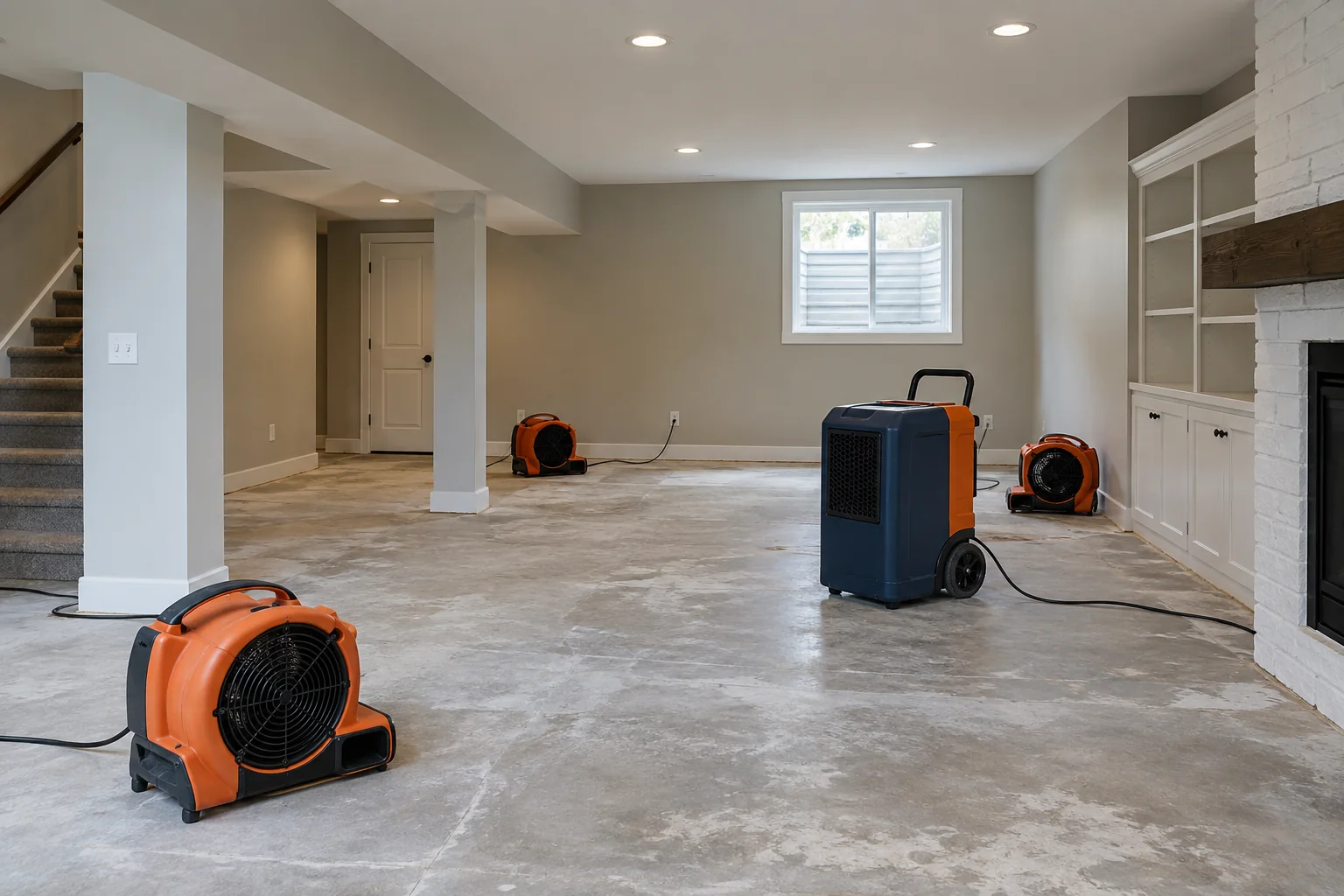
Drying addresses moisture that remains after accessible water is removed. The plan may include air movement, dehumidification, controlled access to wet materials and repeated measurements. Equipment selection and placement should follow the actual space and material conditions. A collection of machines without a monitoring plan is not a complete explanation of the work.
Repairs restore materials and finishes that cannot be retained or that were opened during mitigation. Drywall, paint, trim, floor coverings and cabinetry may each need a separate decision. Confirm whether these repairs are included in the agreement or will be quoted separately. That distinction matters when comparing estimates and planning when a room can return to normal use.
For more detail on individual stages, see our emergency water extraction guide and structural drying guide. If the problem began in a basement or a failed pipe, the basement cleanup and burst pipe cleanup pages explain the additional questions those situations raise.
Call for emergency restoration in Rochester Hills or Shelby Township.
How common household materials change the plan
Flooring deserves more attention than a quick surface check. A hard surface may appear dry while moisture remains at seams or beneath an underlayment. Carpet, pad, wood, laminate and tile assemblies respond differently to exposure, and their condition before the event can affect the decision. Ask about the whole assembly, including the material below what you can see.
Walls and ceilings introduce access questions. A small stain may sit below a larger concealed route. Insulation, multiple layers of drywall or an enclosed chase can change the drying approach. Removal should have a stated purpose, whether that is access, damage assessment or removing material that cannot be reasonably restored. The boundaries should be explained before work proceeds whenever conditions allow.
Cabinets and built-ins combine several materials in tight spaces. Toe kicks, backs, side panels and attached counters may restrict access. A decision to dry in place or remove components should consider the construction and observed damage, not just the appearance of the cabinet doors. Ask how any proposed opening affects later repair and whether a separate cabinet specialist may be needed.
Belongings need their own record. Furniture, rugs, stored documents and electronics are not automatically included in a building cleanup price. Identify high-priority items early and ask how evaluation, handling, storage or disposal will be authorized. Photographs and a written item list can make discussions clearer without promising that every item is recoverable.
Example situations and the questions they raise
The following are illustrative planning scenarios, not completed Friendly Hills projects. They show why similar-looking water problems can lead to different scopes.
A dishwasher leak reaches the adjoining room
A homeowner notices water at the dishwasher and a damp edge in the next room. The immediate question is whether the appliance connection has been addressed. The restoration questions concern the floor beneath the appliance, cabinet bases, adjoining flooring and the transition between rooms. A good estimate explains which of those areas will be checked and how concealed conditions may change the work.
The homeowner should also ask what happens if the flooring extends continuously through several rooms. The emergency cleanup boundary and a later flooring replacement boundary may differ. Those decisions should be documented separately instead of assuming that every connected room needs the same work.
An upstairs bathroom leaks into a kitchen ceiling
Water appears below a bathroom, but the kitchen floor has little visible water. The ceiling route becomes central to the assessment. Access, electrical fixtures, insulation and the condition of the ceiling affect the next step. The household may need temporary restrictions on the kitchen even if the original bathroom problem looks small.
In this scenario, scheduling involves more than running drying equipment. The homeowner needs to understand when the source repair is complete, who will assess concealed materials and who will restore the ceiling after drying. A written handoff between those stages helps avoid repainting before the underlying work is finished.
A basement is found wet after time away
The time of the water event is uncertain, and several storage areas are affected. Instead of treating the discovery time as the start of the exposure, the assessment should acknowledge the unknown duration. Stored items, wall edges and inaccessible corners may influence the inspection and handling plan. Any visible growth or unusual odor should be reported without disturbing the area to investigate.
What affects the price of water damage restoration?
A useful estimate is built around the actual work. Affected area is one factor, but access, water source, material construction, equipment needs, handling of belongings and the length of monitoring can also matter. A small room with several concealed layers may require a different scope from a larger open floor with straightforward access.
Ask for a breakdown that distinguishes initial response, water removal, material removal, drying equipment, monitoring, disposal and repairs. Not every project requires every category. The purpose of the breakdown is to show what is included and what is conditional. If an estimate lists equipment by day, ask when those days begin and end and how additional days are authorized.
Two estimates can look far apart because they cover different work. One may include only mitigation; another may include reconstruction. One may include moving contents; another may assume the rooms are already empty. Before comparing totals, compare room boundaries, material quantities, access assumptions and completion criteria. The lower number is not useful if essential work is simply omitted.
Avoid treating a phone description as a guaranteed final price. A preliminary conversation can help establish the likely assessment process, but concealed conditions can require a revised scope. Ask how changes will be explained and approved, especially before additional demolition, extended equipment use or repairs begin.
Timing, household access and the end of drying
There is no reliable universal timetable for every water loss. The source must be addressed, the affected materials understood and progress checked. Equipment noise, room access and follow-up visits can disrupt normal routines, so ask for a practical household plan at the beginning. Identify bedrooms, workspaces, stairs or bathrooms that are essential to your daily use of the home.
Ask who to contact if equipment stops, another leak appears or a new damp area is noticed. Do not move or switch off restoration equipment merely to make a room more comfortable without discussing the consequences. If noise or access is a serious issue, raise it directly so the arrangement can be reviewed rather than quietly changed.
The drying stage should end with an explanation of the observed conditions and any remaining limitations. Ask which materials were checked, what evidence supports completion and whether any repair areas must remain open. A dry-looking surface and a calendar date are different from a documented completion decision. Keep that distinction in mind when scheduling painters, flooring installers or other trades.
Water damage restoration FAQs
Is water damage an emergency if the puddle is small?
The visible amount alone does not settle the question. Water near electricity, damage overhead, an ongoing leak or water entering concealed materials deserves prompt attention. Call with the location and source information so the next step can be discussed. Do not enter an unsafe room to measure the puddle before asking for help.
Does removing the water finish the restoration?
No. Extraction and drying address different parts of the problem, and repairs may follow both. Ask what remains after standing water is removed, whether moisture checks are planned and whether any affected materials require further evaluation. Confirm whether the scope includes only emergency mitigation or later finish repairs as well.
Can everything be dried instead of replaced?
Not necessarily. Material condition, construction, exposure and contamination concerns affect that decision. Ask for an explanation for each proposed removal or retention decision. The answer may change when a concealed area is opened. A reliable scope should acknowledge that uncertainty instead of promising universal salvage before inspection.
What if the leak happened several days ago?
Tell the representative the discovery date and any uncertainty about when the event began. Mention odors, visible growth or recurring moisture. Do not assume that a dry surface means the entire assembly has dried. The history helps determine what assessment is appropriate and whether a separate mold evaluation should be discussed.
Do you serve both Rochester Hills and Shelby Township?
Yes. Friendly Hills Restoration serves both communities. Call 586-474-5425 with the property location and damage description. Emergency inquiries are welcome 24/7; current availability and any arrival arrangements should be confirmed during the call. We do not promise a specific arrival time before reviewing the situation.
What should I have ready when I call?
Start with your location, a callback number, the source if known, whether water is still entering and the affected rooms. Mention immediate hazards and access restrictions first. You can ask about assessment, the proposed work and the estimate process without already having a complete inventory or knowing whether you will make an insurance claim.