A broken pipe is only the beginning of the cleanup
When a pipe or pressurized connection fails, the repair to the plumbing and the restoration of the home are separate jobs. Stopping the source is essential, but water already inside floors, walls and ceilings may still need attention. Friendly Hills Restoration serves Rochester Hills and Shelby Township. Call 586-474-5425 for 24/7 emergency inquiries about burst pipe water damage cleanup.
Tell the representative where the failure occurred, whether the water has been shut off and which rooms are affected. If you know a plumber is attending, include that information. If you do not know the source or cannot safely reach it, explain the uncertainty. You do not need to identify the exact fitting or pipe material to ask for help with the resulting damage.
The cleanup scope should follow the path of the water, not stop at the plumbing repair. A bathroom supply failure may affect a ceiling below. A laundry connection may wet the adjoining hallway. A leak behind cabinetry may leave little visible floor water while raising access questions inside the assembly. The assessment should connect those observations to a clear room-by-room plan.
Immediate priorities during an active leak
Keep clear of water near electrical equipment, unstable ceilings and other unsafe areas. Do not enter a flooded room to reach an electrical panel or unplug an appliance. If there is immediate danger requiring responders, call 911. A restoration inquiry should not depend on you taking risks to gather photographs or inspect the leak more closely.
If the water source can be stopped from a safe, dry and accessible location, report that when you call. Otherwise, seek appropriate assistance with source control. Do not attempt an improvised pipe repair or use heat to investigate a suspected frozen line based on this guide. Qualified plumbing help may be needed before the system can be used normally again.
If water is coming through a ceiling, stay clear of the affected area and report any bulging, sagging or nearby electrical fixtures. Do not puncture a ceiling or stand beneath it to redirect the flow. The access and material condition need to be evaluated before cleanup work proceeds in that space.
Write down the discovery time and what happened next. “The line was shut off at 7:20, and water was visible in the kitchen ceiling” is useful factual information. Do not substitute the discovery time for the event's start if nobody knows when the pipe failed. That distinction matters when describing how long materials may have been exposed.
Plumbing repair versus water damage restoration
The plumbing repair addresses the failed source. Water damage restoration addresses the building and contents affected by the released water. These services may be coordinated, but one invoice should not be assumed to include the other. Confirm who handles the source, who assesses damage and what each agreement covers.
A plumber's successful repair does not document the condition of every wet floor or wall. Likewise, an extraction visit does not confirm that the plumbing system has been repaired or tested. Keep the findings from each provider together and ask for a clear handoff when work depends on another stage being complete.
The restoration scope may include accessible-water removal, moisture assessment, selective material access, drying and later repair planning. Some projects need only a limited area addressed; others involve several rooms or floors. The observed path and construction should drive the scope instead of a standard package based only on the phrase “burst pipe.”
For more on the removal stage, see emergency water extraction. For the broader process, see water damage restoration. If the affected area is primarily below grade, the flooded basement cleanup guide explains the additional considerations for finished walls, storage and utility areas.
Know what each stage covers
Use these distinctions when reviewing a proposal. The actual scope should follow your property’s assessed conditions.
| Stage | Primary focus | What to clarify |
|---|---|---|
| Water removal | Accessible water in the agreed areas | Work performed and remaining affected assemblies |
| Cleanup and drying | Retained materials, cleaning needs and moisture | Material decisions, monitoring and limitations |
| Repairs | Replacement materials and finishes | Readiness information and a separate repair scope |
Following the water through the house
A useful assessment begins at the reported source and considers the areas below and beside it. Visible staining, wet edges and pooled water are clues, but they do not reveal every concealed condition. Ask which adjoining spaces will be checked and how inaccessible areas will be identified in the record.
In an upstairs bathroom, relevant questions may include the floor assembly, adjacent room transitions, the ceiling below and penetrations around fixtures. The restoration plan should explain whether access is needed and what repairs that access will create. A small opening for investigation and a larger removal for damaged material are different decisions with different consequences.
In a kitchen or laundry area, cabinets and appliances can hide the route. Toe kicks, floor edges and wall bases may need attention even when the exposed floor looks improved. Ask who will handle appliance movement or connection work if needed and whether those activities are included. Do not assume the cleanup team can disturb every connection without another trade.
In a finished basement, water may reach closets, stored contents and wall assemblies that are not immediately visible. The scope should include the actual access limitations. A diagram or room list can help the homeowner understand which spaces were assessed and which require a further decision before the work is considered complete.
Call for emergency restoration in Rochester Hills or Shelby Township.
Material decisions after a pipe leak
Different materials can require different decisions even within one room. A flooring surface, its underlayment and the supporting structure should not be treated as a single interchangeable layer. Ask how the condition of the whole assembly will be evaluated and what evidence supports drying in place, opening for access or replacement.
Drywall and insulation raise questions about concealed moisture and access. The proposal should identify the affected sections and explain why removal is recommended where it applies. It should also address repair afterward. A demolition boundary should follow the assessed need rather than be presented as an unexplained standard height or room-wide assumption.
Cabinetry may involve materials that react differently to water and spaces that are difficult to access. The decision should account for cabinet construction, condition and the ability to evaluate concealed portions. Ask whether separate cabinet work will be needed if components are removed or damaged. Matching finishes and reinstalling counters can belong to a later repair scope.
Belongings require separate consideration. A rug, upholstered chair, box of papers or electronic item is not automatically covered by structural drying. Identify important items and ask how assessment, handling or specialist evaluation is arranged. Before any disposal, understand the documentation and authorization process appropriate to the item and circumstances.
Illustrative burst pipe scenarios
These are illustrative examples, not completed Friendly Hills projects. They explain how location and timing change the questions that belong in the assessment.
A second-floor supply line affects two rooms below
The plumbing source has been repaired, but staining appears in a kitchen and adjoining dining area. The restoration scope needs to address the reported route through the ceiling and the visible conditions in both rooms. The homeowner should ask which portions can be assessed without opening and which uncertainties remain.
The project may involve different milestones for plumbing, drying and ceiling repair. Those milestones should be communicated separately. Booking a painter immediately after the plumbing visit could be premature if moisture assessment and any necessary access work have not been completed.
A laundry connection fails while the household is away
Water reaches several flooring surfaces before discovery. The source is known, but the start time is not. The assessment should record that uncertainty and consider the actual condition of the affected materials. The homeowner should not describe the exposure as brief solely because the leak was shut off quickly after returning home.
This example also raises contents questions. Storage, nearby furniture and items on the floor may need evaluation. Ask whether their handling is included in the emergency scope or whether separate decisions will follow after accessible water has been removed.
A concealed pipe leak is discovered through a wall stain
There is no large puddle, but a wall and floor edge show signs of moisture. The initial question is how the source will be confirmed and addressed by the appropriate provider. The restoration question is how the affected assembly and adjoining spaces will be assessed without pretending that the visible mark defines the entire boundary.
The homeowner should request a staged plan if concealed conditions remain unknown. That plan can explain the initial access, the next review and the approval process for additional work. It is more useful than either a blanket replacement recommendation or a promise that surface drying will solve every concern.
Drying after the source is repaired
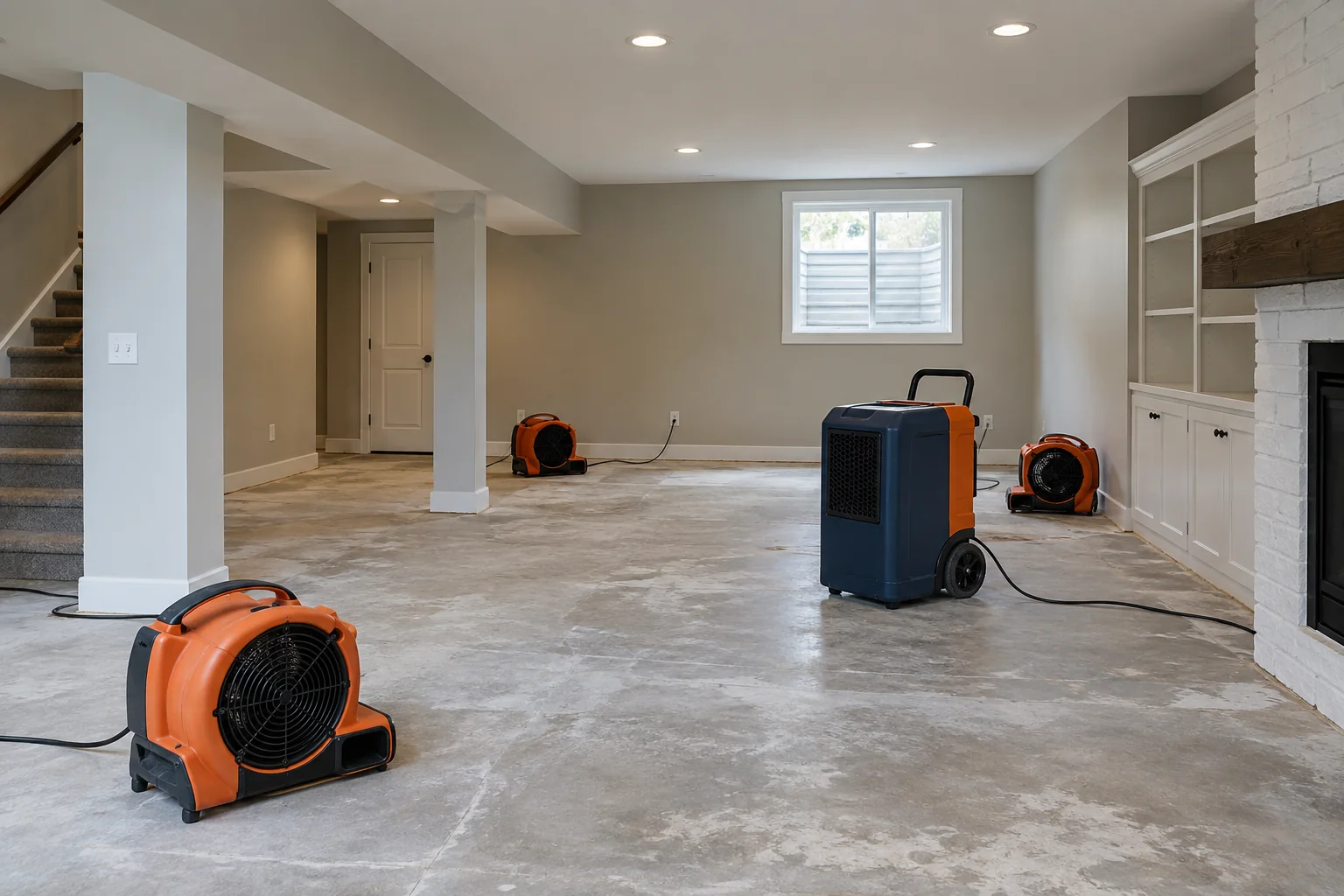
Once the leak is controlled and accessible water is removed, retained materials may still require drying. The proposal should connect equipment and access decisions to the materials involved. Ask what is being dried, how progress will be checked and what would cause the plan to change.
Monitoring should be understandable to the homeowner. A record that identifies rooms, materials and changes over time is more useful than a single unexplained reading. Ask how completion will be evaluated and whether inaccessible portions remain a limitation. The structural drying guide explains these questions in greater detail.
Practical household planning matters while equipment remains. Discuss noise, essential rooms, stairs, pets and scheduled visits. If a setup blocks necessary access or an appliance is unavailable, raise it with the project contact rather than moving equipment or reconnecting systems yourself. The arrangement should be reviewed when household needs and the proposed work conflict.
Finish repairs should wait for the relevant completion decisions. New paint can conceal a stain but cannot provide the missing drying record. Replacement flooring can make a room look normal while leaving unresolved questions about the supporting assembly. Keep the distinction between appearance and documented readiness clear during scheduling.
Estimate and insurance documentation
An estimate should distinguish the failed-source repair from mitigation and finish repairs. For the restoration portion, look for the affected areas, proposed removal, contents handling, equipment and follow-up work. Ask which costs are based on current findings and what conditions could change the scope.
If more damage is discovered behind a wall or below flooring, there should be a process for explaining and authorizing the change. Identify who can approve additional work, particularly if the property owner cannot be present. A written revision should describe the added area or task instead of simply increasing the total without explanation.
Keep a chronology of discovery, source shutoff, plumbing repair and restoration stages. Save photographs taken safely, the plumber's findings, the service agreement and approved changes. Distinguish damage to the building from damage to belongings. This organization helps whether you are paying directly or asking an insurer to review a claim.
Coverage depends on your policy and the circumstances, and the insurer makes that determination. Ask the insurer about documentation and approvals. Do not assume a service provider's description of an emergency establishes coverage for the pipe itself, every affected material or later upgrades you choose during repair.
Before closing walls and replacing finishes
Use a short completion list to keep the project organized. The failed source should have a documented status. The cleanup and drying stages should identify the areas completed and any limitations. Repairs should have their own scope, including the materials and finishes to be installed.
Ask how the repair provider will receive the relevant information from the mitigation stage. That handoff matters when different companies are involved. A wall should not be closed simply because one appointment has ended while another provider still expects access for evaluation.
Finally, keep the records after the room is back in use. If a new stain or damp area appears, the earlier source location and work boundaries can help explain what changed. Report renewed signs promptly rather than assuming they are harmless remnants of the earlier event or automatically the same problem.
Burst pipe cleanup FAQs
The plumber fixed the pipe. Do I still need cleanup help?
Possibly. The plumbing repair addresses the source, while the condition of floors, walls, ceilings and contents is a separate question. If water entered those materials, ask about an assessment. Do not use the absence of a continuing leak as the sole evidence that the surrounding assembly is dry.
Can a small pipe leak affect another floor?
The location and route through the building matter more than the description “small.” Report any stains, drips or wet areas below or beside the source. The assessment should consider those observations and explain any access limitations. It should not assume that the original room is the complete boundary.
Will the entire ceiling have to come down?
That cannot be decided reliably from the service name or a short phone description. Condition, access needs and the affected assembly influence the scope. Ask why a particular removal boundary is proposed and how the next decision will be handled if concealed conditions differ from the initial expectation.
Is water from a broken supply pipe always clean?
Do not make handling decisions from that assumption. The source, elapsed time and path through the building should be explained during assessment. Tell the representative what you know and what is uncertain. Clear appearance or a familiar source does not replace a property-specific evaluation of the affected materials.
Can I schedule painting as soon as extraction ends?
Ask about drying and repair readiness first. Extraction removes accessible water but does not itself document the condition of every wall or ceiling layer. Coordinate finish work with the relevant completion information so a cosmetic repair does not cover a still-unresolved portion of the project.
Who do I call at night for burst pipe damage?
Call 586-474-5425 for Friendly Hills Restoration in Rochester Hills and Shelby Township. Explain whether the source is active, whether a plumber has attended and which rooms are involved. Emergency inquiries are accepted 24/7; current service availability and the next step are confirmed during the conversation.