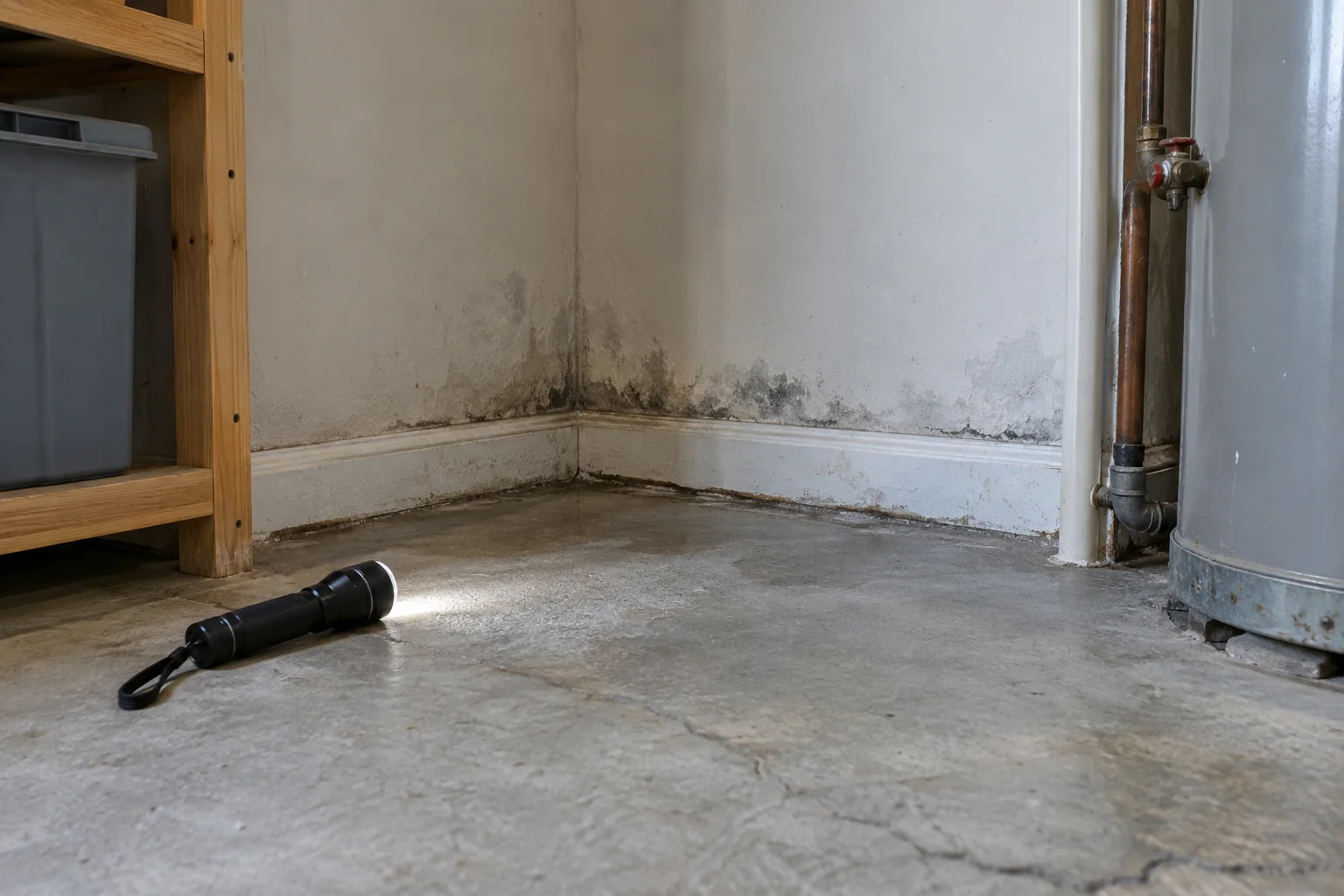
Mold concerns start with a moisture question
Visible growth, a recurring musty odor or a damp wall can leave you wondering how much of your home is affected. The useful first step is to understand the location, the history of moisture and the condition of the materials. Friendly Hills Restoration serves Rochester Hills and Shelby Township. Call 586-474-5425 to discuss the concern and the next step for assessment.
A mold remediation conversation should look beyond the appearance of a surface. Cleaning a mark does not explain why the wall became wet or whether moisture is still entering. Ask how the moisture issue will be considered alongside the proposed cleanup. If a pipe, roof, ventilation or drainage problem needs another trade, that work should be identified rather than hidden inside a vague promise to solve everything.
You do not need to identify a mold species before calling. Describe what you see without scraping, opening a wall or moving affected material to get a closer look. Include the approximate location, whether the area has been wet before and whether the concern returned after earlier cleaning. A clear history can be more useful at the first conversation than an unsupported label such as “toxic black mold.”
What to do when you notice possible growth
Avoid disturbing the area while you arrange advice. Do not dry-brush, sand or open affected materials just to find out how far a mark goes. Keep children and pets away from the immediate area. If there is also an active leak or an electrical or structural hazard, describe that first and keep clear of the unsafe space.
From a safe position, note the location and visible extent. Useful descriptions include “the lower wall behind a basement cabinet,” “the ceiling beneath the upstairs shower,” or “the same window corner that gets damp in winter.” Note any earlier leak repairs and whether the area was professionally dried afterward. Do not assume that a recent repair proves every affected material has dried.
The EPA's guide to mold and moisture in the home emphasizes moisture control as central to addressing mold. It also explains that damp materials should be dried promptly. This website is not a medical assessment; speak with an appropriate healthcare professional about symptoms or individual health concerns.
If a household member has particular health or access needs, mention that when arranging the assessment so appropriate planning can be discussed. Avoid relying on a photograph, an odor description or an internet checklist as a declaration that a room is safe or unsafe for a specific person. Those questions may require different professional input from a restoration estimate.
Assessment: location, extent and unresolved questions
A useful assessment distinguishes visible observations from assumptions about concealed areas. Ask what can actually be inspected, whether access is restricted and how the visible condition connects to known moisture events. A report should not suggest that all wall cavities have been evaluated if the inspection was limited to accessible surfaces.
The moisture history matters. A one-time supply leak that was promptly addressed raises different planning questions from repeated dampness in the same corner. Tell the assessor about prior repairs, seasonal patterns, plumbing above the area and any earlier cleanup. If records or photographs exist, make them available without treating them as proof of the current condition.
Ask which findings support the proposed boundaries of work. Will the scope include one wall, adjacent finishes, a closet or contents stored against the area? If further access is necessary, ask what will be opened and how the next decision will be made. Staged investigation can be appropriate when concealed conditions are genuinely unknown.
Testing is another decision to discuss rather than assume. Ask what question a proposed test would answer, who performs it and how the result would change the plan. A service proposal should explain the purpose and limitations of testing instead of selling a result as a complete description of every condition in the home.
Know what each stage covers
Use these distinctions when reviewing a proposal. The actual scope should follow your property’s assessed conditions.
| Stage | Primary focus | What to clarify |
|---|---|---|
| Assessment | Visible condition, access and moisture history | Findings, limitations and proposed work boundaries |
| Remediation | Agreed handling of affected materials | Completed scope and the planned review |
| Source and repairs | Moisture-source work and replacement finishes | Repair responsibilities and remaining decisions |
What a remediation scope should include
The agreement should identify the work area and the materials involved. It should explain proposed protection of adjoining spaces, handling of affected materials, cleaning or removal decisions and disposal where applicable. Ask which activities are included and which depend on additional findings. A detailed scope makes it easier to understand both the price and the disruption.
Material decisions require context. A solid surface, a paper-faced wallboard and a layered cabinet assembly are different situations. Ask why a material is proposed for cleaning, retention or removal and how inaccessible portions will be handled. A promise that every material can be saved is no more useful than assuming everything must be discarded before inspection.
Containment and work-area controls should be explained in practical terms. Which rooms will be restricted? How will access routes be managed? What should remain untouched during the work? You do not need to design the technical setup yourself, but you should understand how it changes use of your home and who to contact with concerns.
The scope should also define what remediation does not finish. Plumbing, roof repairs, replacement drywall, paint, trim or flooring may need separate agreements. Ask who will address the moisture source and what must be completed before finishes are restored. Cleanup and rebuilding are connected stages, but the responsibilities should remain explicit.
Call for emergency restoration in Rochester Hills or Shelby Township.
Moisture sources and recurring problems
When growth returns to the same location, the history deserves renewed attention. The previous cleanup may have addressed only a visible surface, or a different source may now be involved. Avoid assuming the recurrence proves a specific cause. Ask how the current evaluation will distinguish an ongoing moisture problem from old staining or another condition.
For a wall beneath plumbing, the repair record and present condition both matter. For a basement corner, water entry, nearby storage and access limitations may need discussion. For a window or bathroom area, the timing of dampness can provide useful context. These observations help direct the assessment without turning a homeowner's guess into a diagnosis.
Source repairs should have an owner and a completion record. If a plumber or roofer is involved, keep their findings with the remediation documents. Ask how the restoration work will be coordinated with that repair. Finishing a wall before the relevant moisture issue is addressed can leave the household unable to judge whether the underlying problem has changed.
For damage following a recent leak, our water damage restoration guide explains the broader recovery process. The structural drying guide covers questions about moisture readings and repair readiness. If contaminated water was involved, disclose that during the call because it can change the assessment and cleanup requirements.
Examples of how a mold concern can develop
These are illustrative planning examples, not completed customer projects. They demonstrate the questions to ask without diagnosing any particular property.
A basement wall behind stored boxes
A homeowner moves an unaffected item and notices dark marks near the lower wall behind a storage area. The time of onset is unknown, and the wall is difficult to access. The first conversation should describe the location and storage arrangement without moving all the potentially affected items through the home. Ask how the wall and contents will be assessed and whether nearby areas also need access.
The eventual scope may distinguish building materials from boxes, shelving and belongings. The homeowner should ask how those decisions will be recorded and whether storage arrangements will need to change after the moisture issue is addressed. A cleanup plan should not depend on pretending that inaccessible portions were already inspected.
A bathroom ceiling mark returns after repainting
The homeowner previously painted over a stain, but the mark has reappeared. The important question is not which paint to buy next. The assessment needs the history of moisture, any plumbing or roof work and the condition of the affected assembly. Ask whether the source is understood and whether further evaluation is needed before another finish is applied.
This example shows why cosmetic improvement is not the same as resolving the concern. The homeowner needs separate answers about moisture, affected materials and eventual finish repairs. A single line for “treat and paint” may not explain those decisions adequately.
A wall was closed after a supply-line leak
A musty odor is noticed weeks after a repair, but little is visible. The owner should provide the leak history, the repair date and any drying records. Those facts help the assessor decide what further information or access is appropriate. The odor alone cannot establish a mold species, the size of a concealed problem or the exact work required.
Preparing the household for the work
Ask which rooms and access routes will be affected before moving furniture or belongings. The agreed plan may call for some items to remain in place until they are evaluated. Moving potentially affected items into an otherwise unaffected room can complicate the process. Clarify who handles contents and whether that work is included in the estimate.
Identify essential household functions: the only bathroom, a home office, a child's room or the main basement stair. Discuss work hours, noise, temporary restrictions and the expected sequence. If staying in the home raises concerns, ask the appropriate professionals about the actual conditions rather than interpreting a generic website statement as an occupancy recommendation.
Keep the work-area arrangement intact unless the responsible professional directs otherwise. If a barrier is damaged, equipment stops or new water appears, use the project contact rather than improvising a fix. A clear reporting process helps the household participate without interfering with the agreed work controls.
At the end of each stage, ask what remains unfinished. A cleaned area may still require drying verification, source repair or finish replacement. Knowing which milestone has been reached prevents the family from treating the removal of equipment as the automatic completion of every part of the project.
Costs, testing and completion criteria
The cost depends on the affected area, access, materials, contents, work-area controls and the proposed method. A small visible patch does not necessarily reveal the full assembly, but concealed damage should not be assumed without explanation either. Ask what is known, what is uncertain and how the estimate accounts for that uncertainty.
Separate assessment, any testing, remediation and repairs in the proposal. Ask who performs each service and whether any independent review is contemplated. If testing is offered, request the specific purpose and what happens under different results. Paying for a number without a defined decision attached may leave you with more questions than answers.
Completion should be described before work begins. Ask what inspection, documentation or other agreed review will demonstrate that the contracted work is finished. If a third-party evaluation is part of the plan, identify who arranges it and how any unresolved findings will be handled. Do not assume a guarantee of permanent absence of mold in every part of the home.
Keep the source repair records, scope, photographs and completion information together. If an insurer is involved, ask the insurer what your policy requires and what it covers. Coverage varies by policy and circumstances; a remediation estimate is not a coverage decision. Understand your own payment obligations before authorizing the work.
Mold remediation FAQs
Can you tell whether a mark is mold from a call?
A call can help establish the history and appropriate next step, but it cannot identify every material condition or concealed area. Describe the location, appearance and moisture history. Avoid treating color or a phone photograph as proof of a species, health risk or complete remediation scope.
Do I need to know what kind of mold it is?
You do not need a species name to ask for an assessment. The location, extent, moisture history and material condition are useful starting points. If testing is proposed, ask what question it will answer and how the answer affects the work. Do not purchase a test solely because a color sounds alarming.
Can I paint over the affected area?
Painting does not establish that the moisture issue or affected material has been addressed. Before applying a new finish, ask what assessment and cleanup are appropriate and whether the underlying material is ready. Keep any prior painting history in the record because it can affect what an assessor sees.
Will remediation also fix the leak?
Only if that work is explicitly part of the agreement and handled by the appropriate provider. Plumbing, roofing, drainage or ventilation work may be separate. Ask who is responsible, when the source repair happens and how it will be documented. Do not assume a cleanup price includes every building repair.
Can the problem come back?
A recurrence is possible when moisture conditions persist or a new water event occurs. Discuss the known source and any remaining uncertainties before closing the project. Keep records and report renewed dampness promptly. A broad promise that mold can never return anywhere in a building would not explain your property's actual conditions.
How do I arrange help locally?
Call Friendly Hills Restoration at 586-474-5425 for Rochester Hills or Shelby Township. Explain whether this is a current water emergency, visible growth or a recurring concern. Calls are accepted 24/7, and the appropriate assessment and current scheduling availability can be discussed without requiring you to disturb the area first.