Standing water: call for the next step now
If water is spreading across a floor or collecting in a basement, the first restoration question is often how to remove it. Friendly Hills Restoration serves Rochester Hills and Shelby Township with 24/7 emergency inquiries at 586-474-5425. Tell us where the water is, whether it is still entering and what you know about the source. You can start that conversation without measuring the room or knowing how much water is present.
Emergency water extraction is the removal stage of a broader restoration process. It focuses on accessible water so that assessment, cleaning and drying can move forward. The appropriate method depends on the conditions at the property. Depth, access, source, debris and affected materials all matter. A single description such as “wet carpet” does not reveal the condition of the padding, floor beneath it or nearby walls.
If there is immediate danger, contact emergency responders first. Keep clear of standing water near electricity, unstable surfaces and ceilings that appear to be sagging. Restoration help should not require you to enter an unsafe area to gather better information. Explain the limitation during the call so safe access can be part of the planning.
The information that helps an emergency call
Start with the property location and a reliable callback number. Then describe the rooms involved and whether the source has stopped. “A supply line broke in the laundry room and water reached the hall” is more useful than trying to estimate gallons. If the source is unknown, say so. An honest uncertainty gives the assessment a better starting point than a confident guess.
Mention stairs, narrow access, a finished basement or water on more than one level. These details can affect how the property is approached and what needs to be assessed. Explain whether there are stored belongings, heavy furniture or inaccessible closets in the wet area. You do not need to move those items before asking whether handling is included.
Report any possible drain backup, sewage, outdoor floodwater or unusual debris. Clear-looking water should not automatically be treated as clean. Also explain if the water event may have happened before discovery, such as when returning from travel. The elapsed time can be uncertain, and that uncertainty belongs in the record.
Finally, ask about current availability and the next contact or appointment step. “24/7 emergency calls” means you can make the inquiry day or night; the actual service arrangement should be confirmed for your location and circumstances. Do not make a separate repair appointment based on an assumed extraction completion time.
Safe access and source control
Water removal is only useful when it fits the surrounding conditions. If water continues to enter from a broken line, the source needs attention. If storm conditions or a drainage issue remain active, the plan may need to account for continued entry. Tell the representative what has already been done and whether another professional is on the way.
Do not enter standing water to unplug an appliance, reach a panel or set up a household vacuum. The CDC's returning-home flood safety guidance warns against using wet electrical devices. Qualified help may be needed to establish safe power and access before extraction equipment can operate.
A basement with significant outside water pressure or uncertain structural conditions requires more than a generic pumping instruction. Do not use this guide as a schedule for pumping out a flooded structure. Describe the circumstances and ask for appropriate professional evaluation. The timing and method of removal should follow the building and site conditions.
If a plumber, electrician or other trade has already attended, keep their findings available. A brief explanation of which source or system has been addressed helps distinguish a completed repair from a temporary interruption of the problem. The extraction scope should not quietly assume another contractor has resolved something that remains open.
Know what each stage covers
Use these distinctions when reviewing a proposal. The actual scope should follow your property’s assessed conditions.
| Stage | Primary focus | What to clarify |
|---|---|---|
| Water removal | Accessible water in the agreed areas | Work performed and remaining affected assemblies |
| Cleanup and drying | Retained materials, cleaning needs and moisture | Material decisions, monitoring and limitations |
| Repairs | Replacement materials and finishes | Readiness information and a separate repair scope |
What extraction can and cannot accomplish
Extraction removes accessible water. That can make the damage easier to assess and reduce the amount of water that later drying work must address. It may involve different approaches in open floor areas, carpeted spaces and tight locations. Ask which surfaces and rooms are included and whether contents must be moved to reach them.
Water beneath flooring, inside wall cavities or absorbed into other materials may remain after visible water is removed. That is why a finished-looking floor does not automatically indicate a finished restoration. Ask what moisture assessment follows and whether drying is included in the same agreement. A scope that ends after extraction should clearly identify the handoff.
Extraction also does not repair the source of the event. A failed appliance connection, drain problem, damaged roof or other opening may need separate work. Nor does extraction alone establish that contaminated materials have been appropriately cleaned. If sewage or outdoor floodwater is involved, the cleanup plan must account for those circumstances.
For the larger process, read our water damage restoration guide. If the primary concern is water in the basement, the flooded basement cleanup guide discusses storage, wall assemblies and below-grade access. Our sewage backup cleanup guide explains why contamination changes the questions to ask.
Call for emergency restoration in Rochester Hills or Shelby Township.
Floors, edges and concealed spaces
An open floor may be the most visible part of the loss, but edges often deserve separate attention. Water can reach transitions between rooms, cabinet bases and the spaces behind trim. Ask whether those adjoining areas will be checked and how access limitations will be documented. The extraction footprint and the drying footprint may not be identical.
With carpet, discuss the pad and supporting floor as well as the surface. The condition of the materials and the water source can affect what is reasonably retained. Ask which evaluation is included before assuming that extraction means the entire carpet assembly will be saved. If removal is proposed, clarify handling, disposal and what will be exposed afterward.
Hard flooring also needs a material-specific conversation. Tile, laminate, wood and resilient flooring are assembled differently, and visible seams do not tell the whole story. Ask how the underlying material will be evaluated and whether the proposed work is intended to dry the assembly in place or prepare it for a later decision.
Built-ins and appliances can restrict access. Before anyone moves a refrigerator, laundry appliance or cabinet component, clarify who performs that work and whether connections require another trade. An extraction agreement should not leave you guessing about who is responsible for safe disconnects, contents handling or restoration of the disturbed finishes.
Illustrative extraction scenarios
These examples are planning illustrations, not completed Friendly Hills projects. They highlight differences that affect the work rather than promise a specific method or result.
Water spreads from a laundry area into a hallway
The supply source has been stopped, and water is visible across two floor types. The first question is the affected boundary, including the transition and any nearby wall bases. The homeowner should ask whether the extraction scope includes both rooms, how the appliance area will be accessed and what assessment follows once the water is removed.
The hallway may look ready for use sooner than the concealed edge near the laundry equipment. A useful project update distinguishes accessible-water removal from the condition of those materials. That helps the household understand why the next stage may continue after the obvious puddle is gone.
A basement has shallow water around storage
The floor has a thin layer of water, but boxes and shelves make the boundary difficult to see. The scope needs to address safe access and the handling of affected contents, not just the floor area. Ask how items will be evaluated, who moves them and where they will be placed so that cleanup does not become a series of unplanned trips through the home.
The owner should also report any uncertainty about the source. Water near a floor drain, a wall or the sump area may require different source investigation. The location where water is noticed is not always sufficient to establish where the problem began.
Water remains after a fire response
The building has been released for limited access, and water is present in rooms affected by fire and smoke. The extraction plan must respect remaining restrictions and coordinate with the broader fire recovery scope. Ask how removal, soot cleanup and drying will be sequenced and whether system evaluations are required before equipment operates.
What should happen after water removal?
Ask for a description of the areas assessed after extraction. Which surfaces and assemblies remain wet or uncertain? Is drying equipment proposed, and what materials is it intended to address? Are any further openings or removal decisions needed? These questions connect the emergency response to a defined next stage.
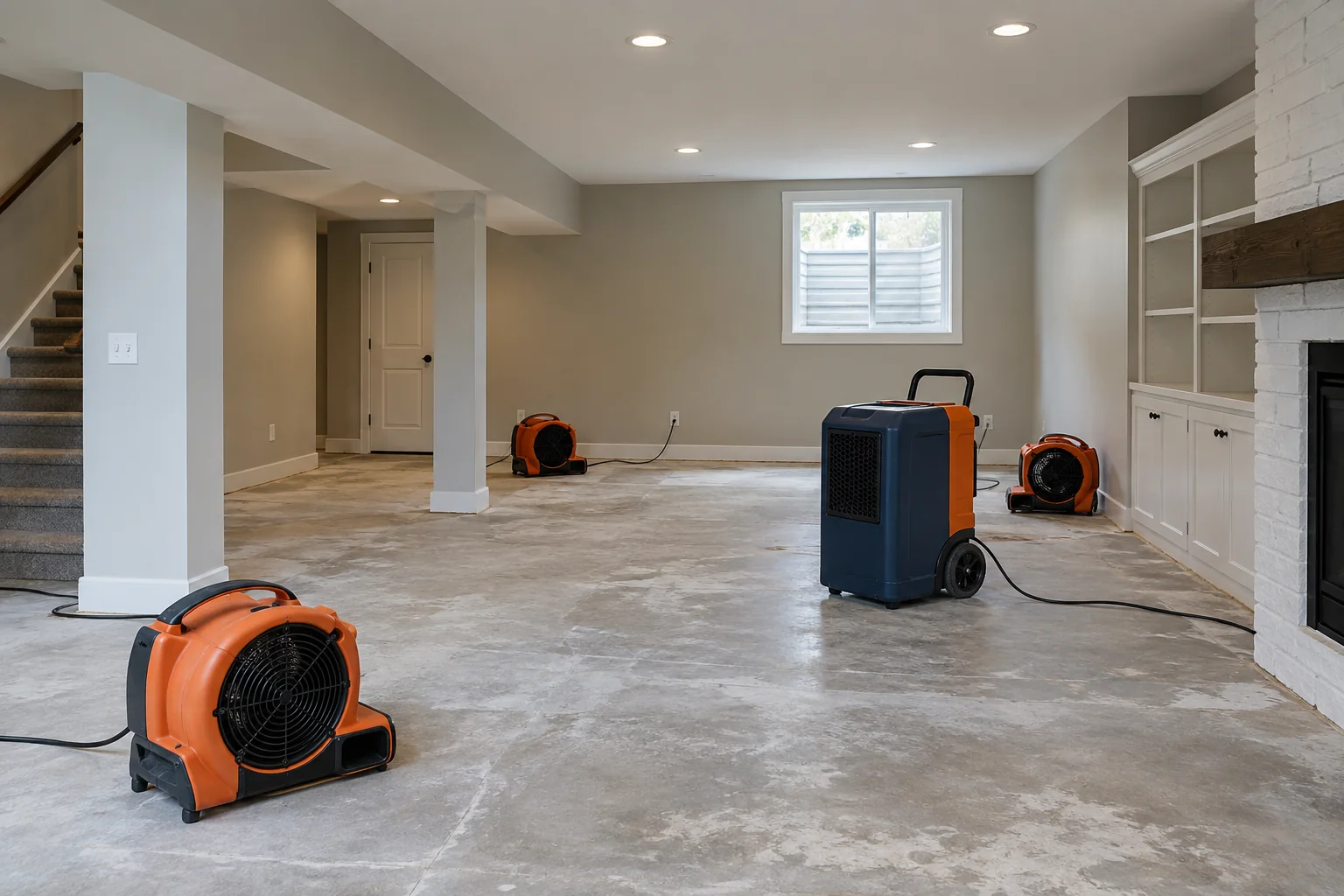
Where drying is included, ask about monitoring and household access. Understand what equipment will remain, how follow-up visits are arranged and whom to contact if something stops or new water appears. Noise and room availability are practical issues worth discussing at the beginning. Moving equipment without consultation can make the agreed arrangement harder to evaluate.
Where cleanup ends with extraction only, ask for a written handoff. A concise record of the work performed, remaining concerns and recommended next decisions helps avoid treating an emergency visit as a complete restoration. It also makes the conversation with a drying or repair provider more precise.
Repairs should follow the relevant assessment and drying decisions. Reinstalling flooring or closing an opened wall is a separate milestone from removing surface water. Our structural drying and dehumidification guide explains the questions that support repair readiness and why a calendar estimate alone does not demonstrate completion.
Pricing and scope questions for extraction
The amount of visible water is not the only price factor. Access, affected rooms, water source, contents handling, equipment, labor and any cleaning or disposal needs can change the scope. Ask which items are fixed in the estimate and which depend on conditions found during the work. A phone estimate may be preliminary when important details are unknown.
Separate extraction from drying and reconstruction when comparing proposals. One provider's total may include equipment left on-site and monitoring; another may cover only the initial removal visit. Ask about minimum charges, after-hours terms if any, contents movement and whether related assessment is included. The useful comparison is between equivalent work, not just two headline numbers.
If additional materials need removal or the affected area proves larger than expected, ask how changes will be approved. Identify who can authorize work while you are away or unavailable. Clear change handling is especially useful in an emergency, when a rushed verbal conversation can otherwise become the only record of an important decision.
Keep photos taken safely, the source repair record and the signed scope. If you plan to make a claim, ask your insurer how it wants emergency mitigation documented. Coverage and payment decisions remain with the insurer and your policy; an extraction estimate cannot guarantee reimbursement.
Emergency water extraction FAQs
Should I wait until morning to call?
You can call Friendly Hills Restoration at 586-474-5425 at any time to discuss an emergency water situation in Rochester Hills or Shelby Township. Explain whether the source remains active and whether access is safe. Current service availability and the appropriate next step should be confirmed during the call rather than assumed from the time of day.
Can I use my household vacuum on the water?
Do not use ordinary household equipment on standing water or operate wet electrical devices. Electrical safety and the type of water involved need to be considered before removal begins. Keep clear of unsafe areas and ask for appropriate assistance. This guide is not a set of instructions for selecting or wiring extraction equipment.
Is clear water safe to handle?
Appearance alone does not establish the source or condition of the water. Explain whether it came from a supply line, drain, outdoor flooding or an unknown location. If you are uncertain, say so and avoid contact. The assessment and cleanup approach should account for the actual history rather than a visual guess.
Will extraction save my carpet or wood floor?
No universal salvage promise can be made from the service name. Materials, construction, exposure and source conditions affect the decision. Ask how retention or removal will be evaluated and whether the underlying assembly is included. Surface water removal is one step, not a guarantee about every affected finish.
Why is drying equipment needed after the water is gone?
Accessible water and moisture retained in building materials are different concerns. The proposed drying plan should identify the materials being addressed and the monitoring used to evaluate progress. Ask for that explanation so you understand the purpose of equipment remaining in a room that no longer has visible standing water.
Does extraction include fixing a broken pipe or drain?
Source repair is a separate responsibility unless explicitly included with an appropriate provider. Tell the representative whether a plumber or other trade has already attended and what they found. The plan should make clear how continued entry will be addressed and who is responsible for any unfinished repair.
What should I receive when the extraction visit ends?
Ask for a record of the work performed, areas involved, remaining concerns and the next stage. If drying or cleaning will continue, understand the schedule and contact information. If the agreement covers extraction only, get a clear handoff so an initial emergency service is not mistaken for a completed restoration project.