After a fire, make the next decision a clear one
A fire can leave several problems at once: burned materials, smoke residue, odors, water from firefighting and a home that cannot yet be used normally. Friendly Hills Restoration helps homeowners in Rochester Hills and Shelby Township start the restoration conversation. Call 586-474-5425 after immediate emergency needs have been addressed. Explain where the fire occurred, whether responders have released the property and which areas appear affected.
The room where the fire started is only the starting point for planning. A useful assessment considers adjacent rooms, contents, access routes and water damage as well as the obvious burned area. It should also distinguish cleanup from structural repairs and from evaluations that require another qualified professional. The goal is to understand what happens first, who is responsible for each stage and which decisions remain open.
You do not need to make every recovery decision on the first call. Begin with safe access, the condition of the building and your most urgent concerns. Tell the representative if you cannot occupy the home, if essential belongings remain inside or if a room is inaccessible. Those details help shape a practical assessment rather than a generic list of cleaning services.
Safe access comes before restoration work
For an active fire, smoke suggesting an ongoing fire or immediate danger, call 911. Do not return to a fire-damaged building until the appropriate authorities say entry is permitted. Being allowed to enter does not mean every appliance, outlet, ceiling or room is ready for ordinary use. Ask which restrictions remain and pass them along when arranging restoration.
Avoid collecting belongings from unstable or restricted areas. Explain what you need and where it is located so access can be discussed. Do not switch on fire-affected appliances to see if they work. Electrical and mechanical systems may require evaluation by the appropriate professional before operation. Restoration cleaning is not a substitute for those checks.
The American Red Cross home fire recovery guide provides practical recovery information, including the need to discard food exposed to heat, smoke or soot. Follow responders' instructions and seek appropriate medical help for health concerns rather than relying on a cleaning assessment to determine personal safety.
Keep pets and household members away from affected work areas while the access plan is established. If someone has particular accessibility or health needs, mention those without waiting for the first workday. The restoration agreement should make clear which areas may be occupied, which are restricted and who can answer questions when conditions change.
Understand the different kinds of damage
Heat and direct fire damage may involve visibly burned materials, distorted finishes or components that require further structural evaluation. These conditions need to be distinguished from surfaces that are primarily soiled. A cleaning proposal should not imply that a damaged building element has been made structurally sound simply because its surface looks better.
Smoke and soot damage may involve residue on walls, ceilings, trim and contents outside the original fire location. Ask which rooms will be inspected and how the cleaning scope will be mapped. An assessment should explain the basis for including or excluding adjoining areas, rather than using the fire room as the automatic boundary.
Odor concerns require attention to affected materials and remaining sources. A pleasant fragrance is not evidence that underlying residues have been addressed. Discuss where odor is strongest, whether certain items seem involved and whether the concern changes when rooms are opened. See our smoke odor removal guide for a more detailed discussion of odor planning.
Water damage may result from firefighting or a damaged building opening. Ask whether water extraction, moisture assessment and drying are part of the fire restoration scope. These tasks can affect the order of cleaning and repair. A room may need both fire-related cleanup and water damage restoration, with different documentation for each stage.
Know what each stage covers
Use these distinctions when reviewing a proposal. The actual scope should follow your property’s assessed conditions.
| Stage | Primary focus | What to clarify |
|---|---|---|
| Emergency response | Immediate fire, access and life-safety conditions | Responder instructions and any remaining restrictions |
| Cleanup and contents | Affected surfaces, materials and belongings | Room scope, item records and treatment decisions |
| Repair and return | Finish repairs and unresolved evaluations | Completed work, limitations and next responsibilities |
What a fire damage assessment should cover
A room-by-room record makes a complex loss easier to understand. Ask for the areas inspected, the visible conditions and the proposed treatment of building surfaces and contents. Identify rooms that were inaccessible, areas needing another specialist and assumptions that could change after materials are opened or removed. Those limitations should remain visible in the written plan.
The assessment should separate what can be cleaned from what may require replacement or further evaluation. Different finishes and objects do not necessarily respond to the same approach. Ask whether a small test area is appropriate before a cleaning method is used broadly, especially on delicate surfaces or valuable items. A successful test on one material should not be treated as proof for every surface in the house.
Discuss how clean areas will be protected during handling, removal and cleanup. The route through the home matters when affected belongings must be moved. Ask where contents will be staged, which doors or rooms remain available and how household access will be managed. This planning is especially helpful when the family is still using an unaffected portion of the property.
The plan should also explain communication. Identify the contact for daily questions, the approval process for changes and the evidence you will receive as stages are completed. Fire recovery often involves several parties. A shared understanding of boundaries helps prevent a cleaning contractor, repair contractor and insurer from working from different assumptions.
Call for emergency restoration in Rochester Hills or Shelby Township.
Building surfaces, contents and specialty items
Walls, ceilings, doors and trim are one category of work. Furniture, rugs, clothing and stored belongings are another. An estimate for structural cleaning may not include evaluating or cleaning everything in the home. Ask for these categories to be separated so you can see what is included, what is optional and what requires a specialist.
Contents decisions should be documented before items leave the property. Ask how items will be identified, photographed, packed and tracked if off-site handling is proposed. Clarify any transportation or storage charges, the authorization process for disposal and the way return delivery will be arranged. An inventory is especially valuable when several family members have belongings in the affected rooms.
Electronics, artwork, important documents and sentimental objects may need specialist evaluation. Describe those priorities early. Do not assume that visible exterior cleaning confirms that an electrical item is safe or that a document can tolerate an ordinary cleaning process. Ask who will make the assessment and whether a separate estimate is required.
For items that cannot reasonably be restored, ask for the reason and the documentation available. A written decision is easier to review than an unexplained discard pile. Where insurance is involved, follow the insurer's documentation requirements before disposal when it is safe and practical to do so. Do not keep unsafe materials in occupied areas just to preserve a claim record.
Illustrative fire recovery scenarios
These are illustrative scenarios, not accounts of completed Friendly Hills jobs. They show how the scope can change with the type and location of the damage.
A contained kitchen fire affects adjoining living space
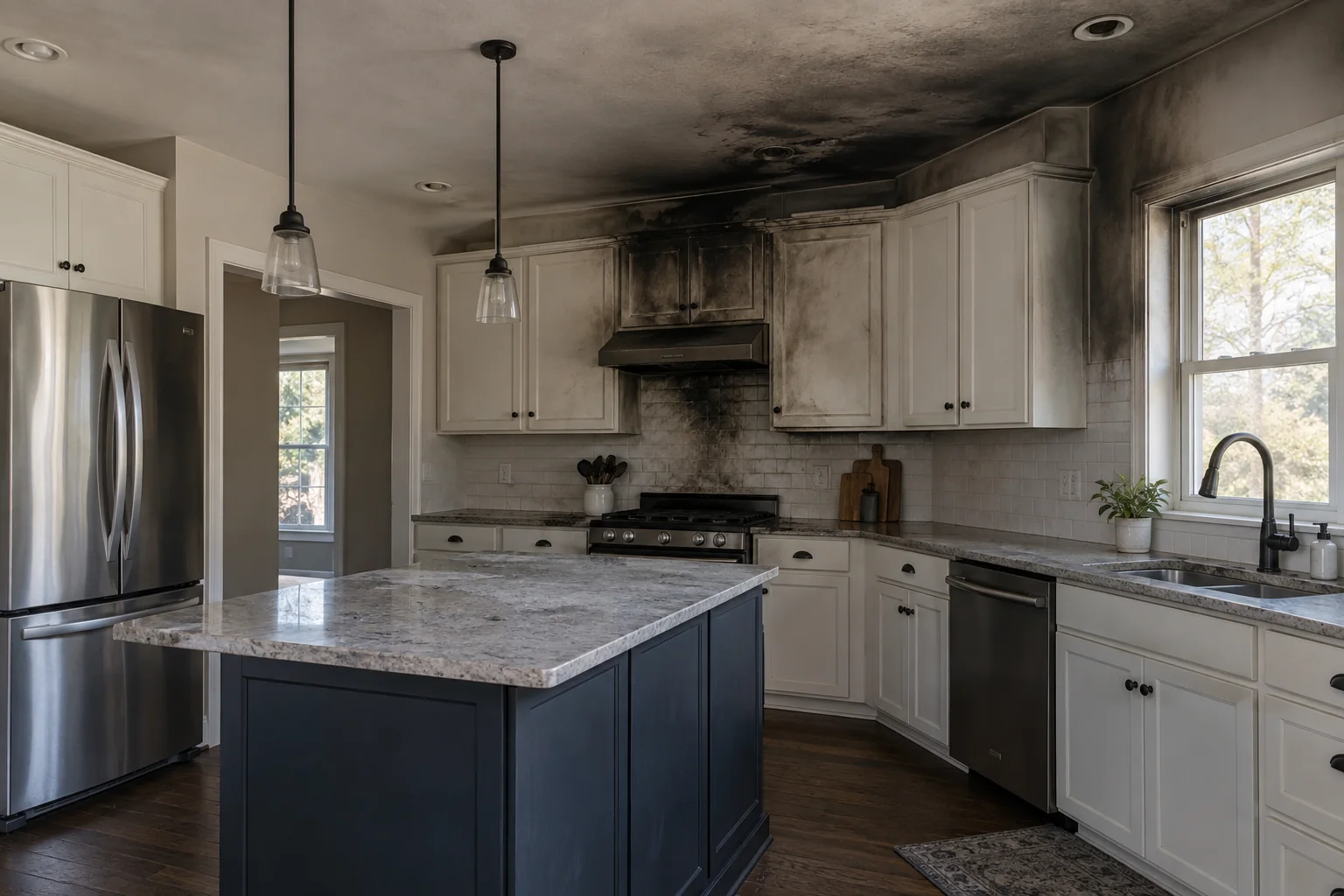
The cabinet near the fire is visibly damaged, while an adjacent living room mainly has odor and light residue. The assessment needs to distinguish direct damage from cleaning needs and to consider the contents in both rooms. The homeowner should ask whether cabinet work, wall cleaning, appliance evaluation and living-room contents are included in one agreement or separate estimates.
A useful next step is a room list with proposed actions. That prevents the kitchen repair from becoming the only focus while adjoining cleanup remains undefined. It also gives the household a basis for deciding which rooms can be used during the work and which furniture should remain undisturbed.
A bedroom fire also leaves water below
The fire-damaged room is upstairs, but water is visible in the ceiling below. Cleanup planning must account for both floors. The homeowner needs to know how access, water assessment and drying will be coordinated with soot cleanup. Repainting the downstairs ceiling should not become the first step simply because that damage is less visually dramatic.
This situation can require separate milestones: approved entry, source and system evaluation, water mitigation, fire cleanup and repair readiness. Asking for those milestones in writing makes the project easier to follow than a single broad promise to restore the house.
Smoke affects stored belongings away from the fire
A closet outside the original room has an odor concern, but its contents look normal at first glance. The decision is not automatically to discard everything or clean nothing. The question is how affected items will be evaluated, what treatment is suitable and how the result will be reviewed. The owner should identify items with special value before general handling begins.
The recovery sequence and household planning
Fire restoration should have a sequence that reflects the property. Immediate access restrictions, source conditions, water damage and cleanup needs may determine what can start first. Ask which tasks can overlap and which depend on another decision. Painting, flooring and cabinet installation may need to wait until the relevant cleanup and drying stages are complete.
If the home cannot be occupied, discuss practical access for essential belongings and follow your insurer's instructions about any available temporary living benefits. If part of the home remains in use, ask about work hours, access routes, noise and restricted rooms. Avoid assuming that a clean-looking area has been approved for occupancy simply because workers are present elsewhere.
Agree on how progress will be reviewed. Photographs, room checklists, material decisions and stage summaries can be more useful than a broad percentage-complete update. A project may look nearly finished while specialty contents or a system evaluation remain unresolved. Ask what must happen before the next trade begins and what remains outside the current contract.
What changes the cost and timeline?
The room count alone cannot determine the price. Direct damage, residue distribution, surface types, contents handling, access, water mitigation and repair requirements all influence the scope. A contained fire with complicated cabinetry and specialty belongings can raise different questions from a larger area with straightforward surfaces.
Request an estimate that separates structural cleaning, contents work, odor treatment, removal, drying and reconstruction when those services apply. Ask whether testing, storage or specialist evaluations are additional. If the scope is preliminary, identify the assumptions and the circumstances that would trigger a revision. Written change approval helps keep a difficult recovery understandable.
Timing may depend on more than cleaning labor. Access releases, insurer communications, material availability and repair scheduling can affect the overall project. Ask for a current sequence with dependencies rather than a single completion date that ignores unresolved conditions. When a date changes, the explanation should identify the task or decision responsible.
Do not compare two estimates only by total. Check whether both include the same rooms, contents categories, odor work and final repairs. Ask what completion means for each line item. A cleaning-only estimate and a complete repair proposal can be both reasonable while describing very different outcomes.
Records to keep throughout the project
Create one place for your service agreement, scope, photographs, item inventory, insurer correspondence and approved changes. Record who is responsible for each stage and how to reach them. A simple chronology can help when several appointments and decisions happen close together, especially if you are temporarily staying elsewhere.
Separate the building inventory from the contents inventory. Note special handling instructions and which items have moved off-site. Keep the descriptions specific enough to recognize individual items later. If a decision changes from cleaning to replacement, ask that the reason and any revised cost be recorded rather than handled only in conversation.
Insurance coverage is determined by the insurer under your policy. Ask the insurer about requirements and approvals; do not rely on a restoration marketing statement as a promise of coverage. Before authorizing work, understand your payment responsibility and what happens if an insurer approves a different amount or scope.
Fire and smoke restoration FAQs
Can I call before I know the full extent of the damage?
Yes. Once immediate emergency needs are addressed, you can call with the information available. Explain the fire location, entry restrictions, visible water damage and any urgent access needs. An initial conversation is a starting point for assessment, not a requirement to make every repair and contents decision immediately.
Does a fire damage estimate include rebuilding?
Not always. Cleaning, drying, demolition and reconstruction can be separate services and agreements. Ask whether the proposed scope includes drywall, paint, flooring, cabinetry and other finish work. If repairs will be quoted later, request a clear handoff point so you know what the first agreement will actually accomplish.
Can smoke odor remain after the room looks clean?
Appearance and odor are different observations. If an odor concern remains, it should be reviewed in relation to materials, contents and the completed scope. Do not treat fragrance as confirmation of restoration. Ask how unresolved concerns will be reported and reassessed before you close out the relevant work.
Should I start wiping soot off my furniture?
Avoid experimenting on valuable or delicate items. Surface type and condition affect the appropriate cleaning approach. Keep the item undisturbed and ask about assessment or specialist handling. A method that appears to work on one hard surface may not be appropriate for upholstery, unfinished wood or an electronic device.
Can I stay in the house during cleanup?
That depends on access restrictions, building conditions, system evaluations and the planned work. Ask the appropriate authorities and professionals what conditions apply to your property. Tell the restoration contact about household needs, but do not assume that a general service estimate is an occupancy or health clearance.
Who do I call for local fire restoration questions?
Call Friendly Hills Restoration at 586-474-5425 for Rochester Hills and Shelby Township. Emergency inquiries are accepted 24/7. Describe the situation so assessment and current service availability can be discussed. For an active fire or immediate danger, contact emergency responders first.